Backing the companies that change the world, and are built to prove it.
Greater Good Exponential Capital invests in fifth-industrial-revolution companies whose disruption is big enough to make a real difference, and whose customers and profits show it.
From about US$3 trillion a year today to US$7.5–14 trillion by 2035.
Cheaper AI drives more use, not less. The money goes into compute, power, grids, labs and materials, and demand for capital compounds at 7–11% a year.
Sources: BloombergNEF, Energy Transition Investment Trends 2026 and New Energy Outlook 2026; McKinsey, The cost of compute (2025); Crunchbase, 2025 venture data. Base: BNEF base scenario and McKinsey continued momentum. Accelerated: BNEF net zero and McKinsey accelerated demand. The 2035 range and the trend extension are North Star's synthesis. Illustrative, not a forecast.
Two poles, and a fast-growing world beyond them.
Sources: BloombergNEF; Synergy Research; GlobalData; Crunchbase; IEA. North Star estimates; 2035 applies the US$7.5tn base case to projected regional shares. Indicative.
Ten giants at the top, and a gap in the middle.
The largest pools of capital are going into mega-projects and the biggest AI companies. Venture capital is a small slice, and it is concentrating too.
Sources: company and fund announcements; Bloomberg; SoftBank; MGX; Brookfield; BlackRock; PIF/HUMAIN; China Big Fund III; PitchBook/NVCA. Indicative and not like for like. Venture capital firms in green.
The fifth industrial revolution is short of capital where it matters most.
Seed, Series A and Series B: where we invest
Proven technology is stalling between seed and growth. The large funds have moved up to ever-bigger rounds and won't write the $10–40m cheques that companies with real IP and real customers now need.
That is GGEC's sweet spot. We back companies at seed, Series A and Series B, where the gap is widest and the pricing is most attractive.
Sources: Carta; Crunchbase; PitchBook/Carta median round sizes; Silverpeak. "Now" = 2022–24 cohorts. Gap estimates are North Star estimates and indicative only.
Value creation is moving to the companies building the next decade.
Between 2025 and 2035, more of the world's value will be created by focused, high-growth companies than by incumbents. They generate more intellectual property per pound of R&D, and Europe is full of them.
Our test for the "greater good" is practical. Is the disruption big enough to change how the world works? Are people buying it? Is it, or will it be, profitable? Real customers and real profit are the signal.
GGEC is building a focused, curated portfolio of these companies. Quality, not volume.
Private-equity discipline, applied to exponential companies.
Disruption and exitability
We only take on companies that score highly on both. AI-driven screening ranks every opportunity before a human looks at it.
Proven management
We back experienced teams with a record of delivery. Leadership assessment sits at the heart of every decision.
Disclosure first
Every company completes a full disclosure exercise before any legal negotiation begins. Disclosure first, not last.
Yield as well as growth
We favour structures that pair a fair equity stake with a running yield, rather than taking the most aggressive equity position.
Built to exit
We take a private-equity approach to exits, planning each investment around an average holding period of about five years.
Investment committee
No capital is committed until a company has passed full investment committee scrutiny.
The whole of the fifth industrial revolution.
Three innovation hubs. One team.
A lean team that spends real time where the founders are, not in an industrial park.
To the next 20 economies: we're here. How can we help you?
Left to itself, the fifth industrial revolution will concentrate its gains in a handful of countries. On current trends we expect the five largest economies to capture around 70–75% of the value it creates. History shows what happens when the gains of an industrial revolution fall to too few: the power and wealth gaps that follow last for generations.
GGEC exists partly to soften that impact. Our ambition is that around half of the benefit flows to the next 20 economies, not 20–30%.
The next 20 economies
Ranked by projected 2026 nominal GDP, IMF World Economic Outlook, October 2026. Shares of benefit are GGEC estimates and ambitions, not forecasts.
How we can help
Building something the world needs?
We look for experienced founders of exponential-age companies with real customers, a path to profit and a credible route to exit. If that's you, start a conversation.
Introduce your companyInstitutional and qualifying investors
Information on GGEC's strategy and investment opportunities is available only to professional, institutional and other qualifying investors, through appropriately authorised firms.
Register your interest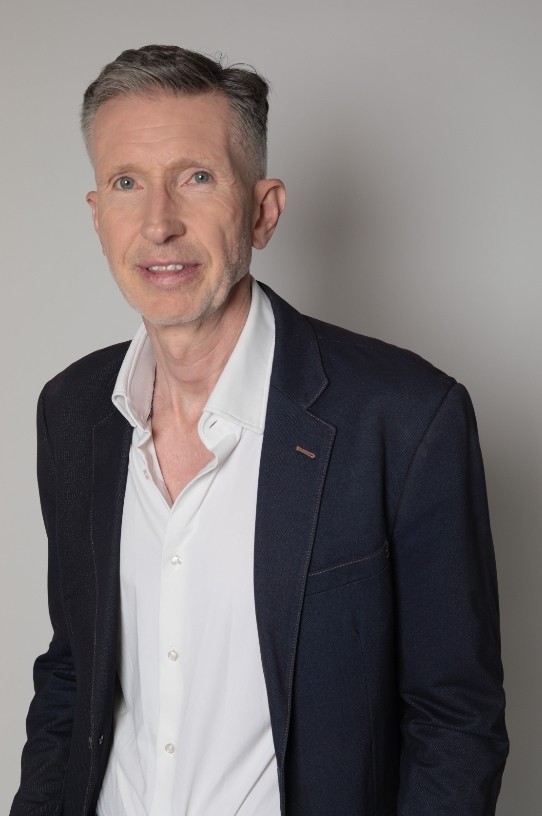
Michael P. Henebery
Mike has 37 years' experience in finance and private equity. He was Founding Partner and CIO at Gresham Private Equity, where he helped raise Gresham 3 (c.£230m) and Gresham 4 (c.£340m) and invested in 47 deals in six years: 17 platforms and 30 add-on acquisitions.
Before Gresham he was at Montagu Private Equity, Price Waterhouse, Investec and Arthur Andersen. He later founded Palio Capital and built Fabify International. He now runs North Star Placement.
His career has been spent spotting supply and demand imbalances in capital. He sees the exponential age as the next one.
Start a conversation.
The quickest way to reach us is WhatsApp. Please don't send confidential, price-sensitive or personal financial information through this channel.
Message us on WhatsApp · +34 711 078921